01What's the full paint order?
Prime → base colours dark-to-light → wash → highlights and edge work. Each step sits on top of the one before it: primer gives paint something to grip, base colour gives the wash something to tint, and the wash needs to be down and dry before the highlights go on, so nothing covers them back up afterwards.
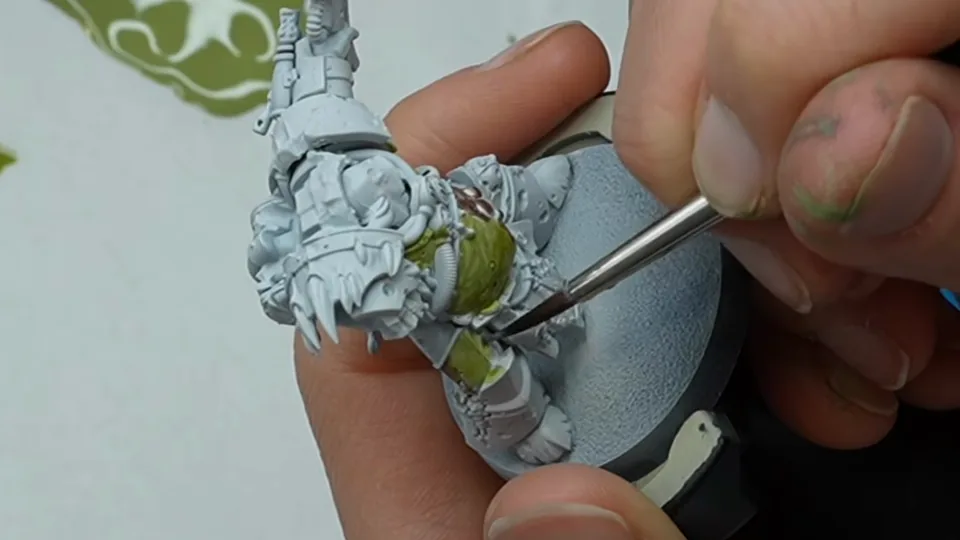
The "dark-to-light" part is its own small decision. You can paint one flat colour and add shading and highlights afterwards, or mix several shades up front — darkest in the recesses, lightest where light would land — and build the form in before the wash. The Pigmentum used the second method, copying a Golden Demon winner's approach:
“Richard said to start by mixing four colors from the beginning and establish the light and shadows instead of just painting the whole thing in one color and then worrying about the shadows later. So that's exactly what I did.” — Episode 03
02Why wash before you highlight?
A wash is thin, dark paint that's designed to run into recesses and settle there — but it doesn't stay in the recesses only. It tints every surface it crosses on the way, which means any highlight already sitting on that surface gets pulled back down toward the base colour. Shade first with the wash, let it dry completely, then put the highlights on top where the wash can't touch them again.
This is the single most repeated lesson on the channel, and The Pigmentum learned it on her very first miniature, the hard way:
“I started layering and mixing colors, making everything brighter and brighter. Kind of tried to create shadows and highlights. And honestly, I thought I was doing pretty well. I decided to put a wash over it. And after the wash, it looked absolutely nothing like the shades I just had spent so much time putting on. Amazing.” — Episode 02
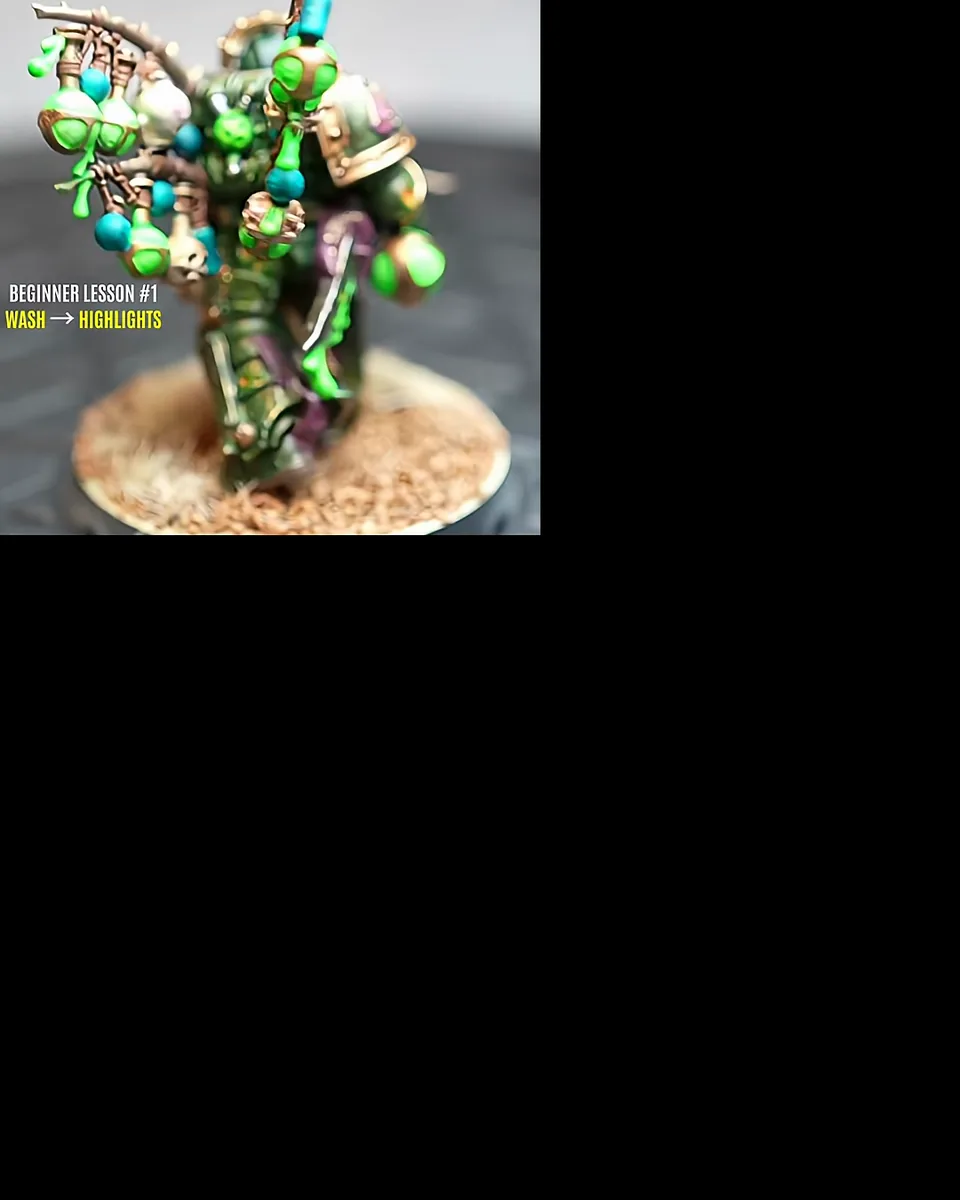
She later cut the moment into a Short and wrote the rule on it herself, in four words:
“I later learned, wash first, highlight after.” — her Short
03Why do some painters wash or glaze again afterwards?
This is general painting practice, not something The Pigmentum has shown on camera: some painters don't stop at one wash. Once highlights are finished, they'll run a very thin glaze — almost-water paint — or a light second wash over a whole area, to tie a stark new highlight back into the surrounding colour, to knock back contrast that looks fine up close but too harsh across a table, or to even out sheen before varnish.
None of that changes the order that matters most: prime, base coat, wash, highlight, in that sequence, the first time. A glaze or second wash afterwards is optional finishing on top of highlights that are already where they should be — not a substitute for washing before you highlight.
04What did The Pigmentum actually do on camera?
- Episode 02, first miniature: painted the whole thing one green, layered brighter highlights on top, then washed over it and watched them disappear. Watch Episode 02
- Her Short on it: the same moment cut down, captioned "wash → highlights" in her own words. Watch the Short
- Episode 03, Golden Demon copy: base colours mixed dark-to-light from the start, the correct order held all the way through to one edge highlight on the belly plate. Watch Episode 03
- Episode 05, three Poxwalkers: the order she'd learned, repeated on purpose — wash the bronze to dirty it down, then dry brush the brightness back on top. Watch Episode 05
For the layering, colour-mixing and edge-highlight detail that sits inside the "highlights" step, see the full highlighting page. For what to prime with before any of this starts, see the full priming page.
Back to the full beginner's guide: what to buy, assembly, thinning paint and every mistake so far →
FAQ
- What order do you paint a miniature in?
- Prime, then base colours dark-to-light, then a wash to set the shading, then final highlights and edge work on top. That order is the one almost every tutorial agrees on, because each step is designed to sit on top of the one before it: paint needs primer to grip, a wash needs base colour underneath to tint, and highlights need to go on last so nothing covers them again.
- Do you wash before or after highlighting?
- Before. A wash is thin, dark paint that runs into recesses but also tints every surface it crosses, so highlights painted before the wash get pulled back down toward the base colour. Shade with the wash, let it dry, then paint the highlights on top where they stay bright. The Pigmentum learned this the expensive way on her first miniature.
- Why do some painters wash or glaze again after highlighting?
- As a finishing touch, not a correction. A very thin glaze or a light second wash over a finished area can tie a stark highlight back into the model, calm down contrast that looks fine up close but too sharp at arm's length, or unify tone before varnish. It's optional polish on top of the normal order, not a replacement for washing before you highlight the first time.
- Why does paint order matter so much on a miniature?
- Because every layer on a miniature sits on, and interacts with, the one before it. Primer has to come first so paint can grip. Base colours need to be down before a wash has anything to tint. A wash needs to be dry before highlights go over it, or the two colours smear into mud. Do a step out of order and you redo work, as happened on camera.
- What if my wash already ruined my highlights?
- It can be fixed without starting over: let the wash dry fully, then paint the highlights again on top, slightly brighter than before to compensate for the tint. A second thin wash in the recesses only (not over the whole part) can clean up any that bled onto raised areas. The fixes are on the highlighting page's 'fixing a highlight that went wrong' section.